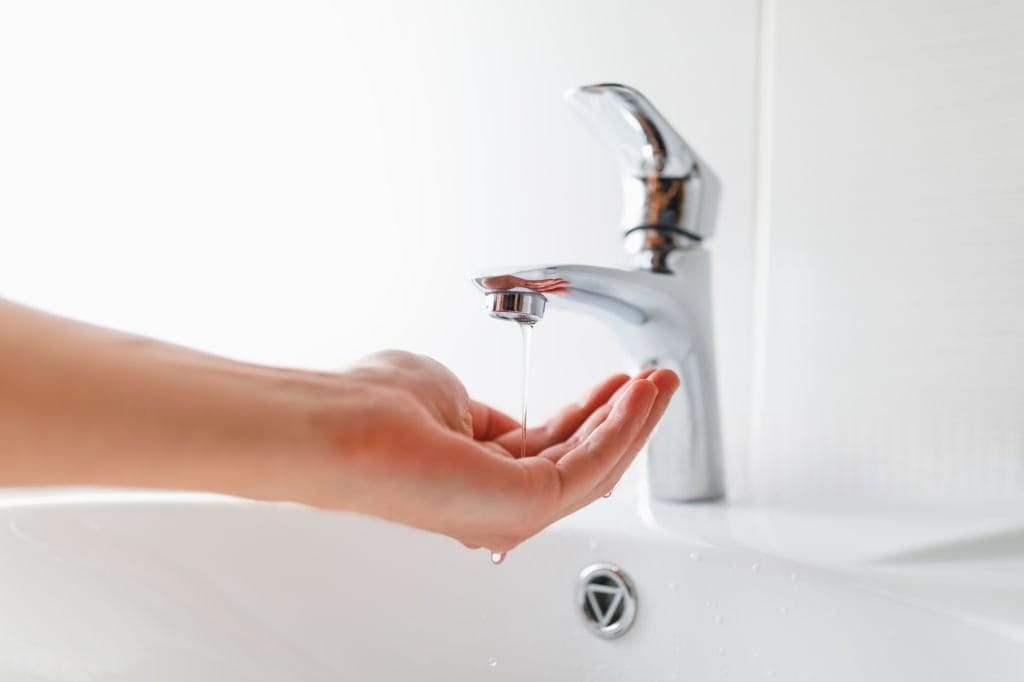
Causes of low water pressure range from a simple clogged aerator to a more significant issue like a hidden leak or aging pipe, and understanding what is behind the drop helps you know whether it is a quick fix or something that needs a closer look.
Low water pressure rarely happens for no reason, and the specific pattern you notice, whether it affects one faucet or the entire home, is usually the clearest clue to what is actually going on.
Common Causes of Low Water Pressure in a Single Fixture
A clogged faucet aerator or showerhead Mineral deposits from hard water build up inside the small screen at the tip of a faucet or showerhead over time, gradually restricting flow. This is one of the most common causes of reduced pressure at a single fixture and is often the easiest to resolve.
A partially closed shutoff valve Every fixture has its own shutoff valve, and if one is not fully open, whether from a previous repair or an accidental bump, it can noticeably reduce pressure at that specific faucet or appliance.
A worn or failing cartridge Inside many faucets, a cartridge controls water flow and mixing. As it wears down, flow can become restricted even though the rest of the plumbing system is functioning normally.
Common Causes of Low Water Pressure Throughout the Home
Mineral buildup inside pipes In areas with hard water, calcium and magnesium deposits gradually narrow the interior diameter of pipes over the years. As the buildup thickens, water has less room to move, which lowers pressure throughout the entire home rather than at just one fixture.
A hidden leak in the system Water escaping through a leak, whether in a wall, under a slab, or along an underground line, means less water is reaching your fixtures at the pressure it should. A leak large enough to affect pressure is often accompanied by a rising water bill.
Corroded or aging galvanized pipes Older homes with galvanized steel piping are especially prone to internal corrosion, which narrows the pipe over time in much the same way mineral scale does. This is a common contributor to gradually worsening pressure in older Midland homes.
Issues with the municipal supply Occasionally, low pressure originates outside the home entirely, whether from municipal maintenance, high demand during peak usage times, or an issue with the water main serving your street. This type of drop is usually temporary and affects neighboring homes as well.
A failing pressure regulator Many homes have a pressure regulating valve where the main water line enters the house. When this valve wears out or malfunctions, it can either restrict pressure too much or fail to regulate it consistently.
A closed or faulty main shutoff valve If the main valve controlling water flow into the home is not fully open, every fixture in the house will experience reduced pressure at the same time.
How to Narrow Down the Cause?
Start by checking whether low pressure affects a single fixture or the entire home, since this is the most useful first clue. If only one faucet is affected, the aerator or cartridge is the likely source.
If pressure is low throughout the house, check your water meter for movement with everything off, which can indicate a leak, and confirm that both your main shutoff valve and pressure regulator are functioning as expected. Comparing pressure with a neighbor, when possible, also helps rule out a municipal supply issue.
Why Hard Water Makes This More Common in Midland?
Midland’s very hard water accelerates mineral buildup inside pipes, fixtures, and water heaters faster than in most parts of the country.
Homes without a water softener often experience gradually worsening pressure over several years as calcium and magnesium deposits narrow pipe interiors from the inside out, even when the plumbing itself is otherwise in good condition.
When to Call a Professional?
If cleaning aerators and checking valves does not resolve the issue, or if you suspect a leak based on your water meter or a rising bill, a licensed plumber can pinpoint the exact cause using pressure testing and leak detection equipment.
This is especially important for older homes with galvanized piping or homes on a private well system, where the cause is often less straightforward to diagnose without professional tools.
Serving Midland and the Permian Basin
Our team diagnoses low water pressure issues throughout Midland and the surrounding Permian Basin, using accurate testing methods to identify whether the cause is inside your home or part of the broader water supply.
Frequently Asked Questions
What is the most common cause of low water pressure?
A clogged aerator or showerhead affected by mineral buildup is one of the most frequent causes, particularly in areas with hard water like Midland.
Why does my whole house have low water pressure?
Whole home low pressure is often caused by mineral buildup inside pipes, a partially closed main valve, a failing pressure regulator, or in some cases a hidden leak somewhere in the system.
Can hard water cause low water pressure?
Yes. Calcium and magnesium deposits gradually narrow the interior of pipes and fixtures over time, which restricts water flow and reduces pressure throughout the home.
How do I know if low water pressure is caused by a leak?
Checking your water meter with all fixtures turned off is the most reliable way to confirm a leak. If the meter continues to move, water is flowing somewhere in the system that it should not be.
Is low water pressure always a plumbing problem?
Not always. Sometimes low pressure comes from the municipal water supply due to high demand or maintenance work, which typically resolves on its own and affects other homes in the area as well.
Can a water softener help improve water pressure?
Yes. Reducing incoming water hardness with a softener helps prevent the mineral buildup that gradually narrows pipes, which supports more consistent pressure over the long term.